
Acacia, lavender, chestnut… European honey is very familiar to us. But do you really know African honey? Thousands of kilometres away, West Africa and Madagascar produce single-flower honeys of a rarity and aromatic intensity that often go unnoticed. Shea, tamarind, mangrove and néré are all flowers you will not find in our latitudes.
So what really sets African honey apart from European honey? Beyond geographical origin, it is the terroir, the flora, the harvesting methods and the rarity that make the difference. Here are 5 key differences to help you understand — and enjoy — what is really in your jar.
1. Terroir: a radically different climate and flora
The first major difference is botanical. A honey directly reflects the flowers the bees forage on, and Africa’s honey-producing flora simply has no equivalent in Europe.
In temperate Europe, bees forage on acacia, rapeseed, sunflower, lime, lavender or chestnut. In West Africa, the beekeeping landscape is built around endemic trees and shrubs such as shea, néré, tamarind and cashew. In Madagascar, mangroves and lychee trees create aromatic profiles that are unique in the world.
This wild flora, often from well-preserved and lightly farmed areas, produces honeys with a much stronger character, shaped by a tropical climate and dry seasons that intensely concentrate the aromas.
2. Single-flower varieties: the signature of premium African honey
In Europe, single-flower honey (made mainly from one type of flower) is often synonymous with quality: acacia, lavender or chestnut honey come to mind. Africa offers an equally single-flower range, but with varieties you will not find anywhere else.
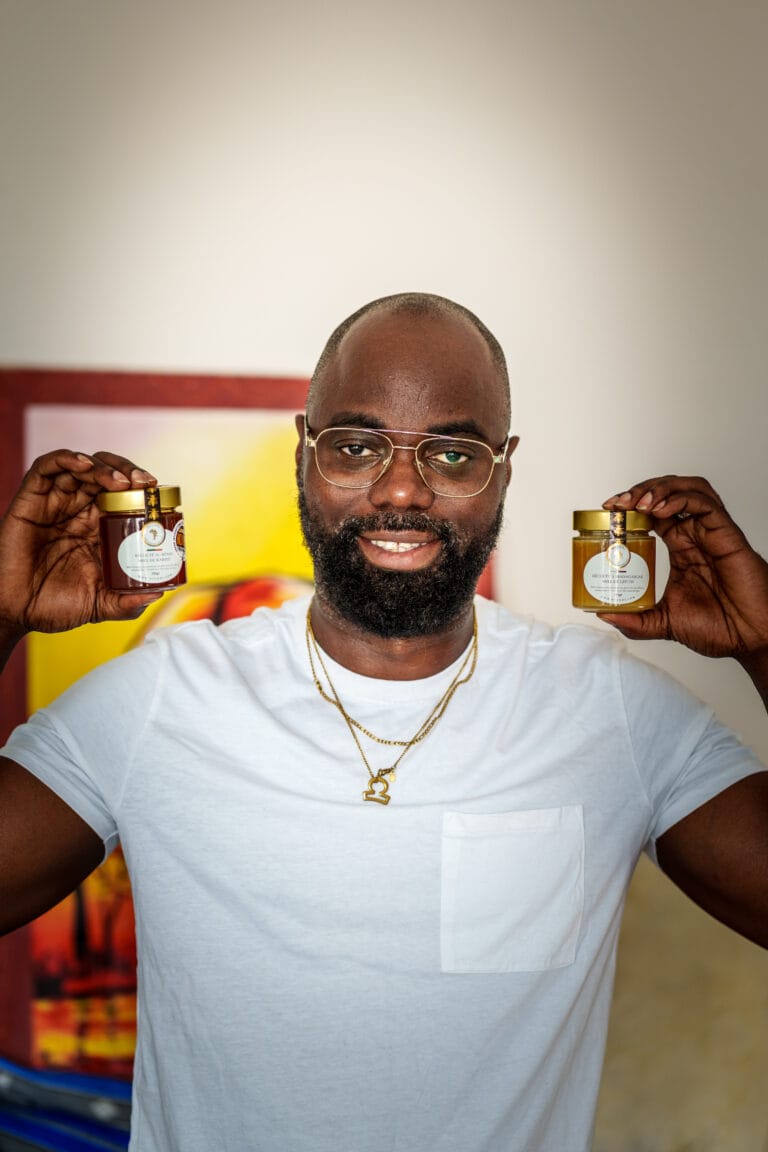
At NYUKKI, this wonderful diversity comes in 14 single-flower honeys from Benin, Burkina Faso and Madagascar:
- Shea honey: amber, round and lightly caramelised. It won a Platinum Medal at the London International Honey Awards 2026.
- Tamarind honey: tangy, fruity and surprisingly fresh. It won a Gold Medal at the same awards.
- Mangrove honey from Madagascar: mineral, briny and truly unique.
So while European consumers know a dozen classic single-flower honeys, honey from Benin and the region opens up a whole aromatic repertoire still waiting to be explored.
3. Sensory profile: colour, texture and intensity
Tasting an African honey is often a real sensory surprise. European honeys generally range from very light (like acacia) to very dark (like chestnut), and their textures are usually tightly controlled by the industry.
African honeys, however, stand out in several ways:
- Very intense colours, from deep amber to mahogany brown, a sign of their richness in compounds from wild flora.
- Particularly powerful and complex aromas, which can be fruity, woody or spicy depending on the variety.
- Natural, living textures: minimally processed, they respect the honey as the bees made it.
In short, this intensity makes premium African honey a tasting product in its own right, as much as a cooking ingredient.
4. Beekeeping: cooperatives and artisanal production
The fundamental difference also lies in how honey is produced. European beekeeping is now largely professionalised, mechanised and governed by dense regulations.
In Africa, harvesting most often relies on artisanal, cooperative beekeeping deeply rooted in the land. That is why NYUKKI works in direct partnership with African beekeeping cooperatives such as APIVALOR, ASAB and CERFAT, and actively supports the AZOLI training programme for young beekeepers in Benin.
This virtuous model favours limited volumes, rigorous traceability at cooperative level and fair pay for producers: human-scale beekeeping, where each batch tells the story of a precise geographical origin.
5. Rarity: why African honey is an exceptional product
The last difference, and not the least, is market availability. European honeys are widely distributed and produced in large volumes, whereas single-flower African honey remains rare on the European market.
This rarity comes from several key factors: seasonal, limited harvests; very strict health requirements for imports into the European Union; and export supply chains that are still not well structured. The result is a rare honey, selected batch by batch, closer to a grand cru than to an everyday mass-market product.
Heritage trees: the traditional uses behind African honey
If there is one thing that deeply sets African honey apart, it is its ancestral link with traditional care. In West Africa and Madagascar, honey-producing trees are not just sources of nectar: they have held a central place in traditional practices for thousands of years. Bees forage on these renowned species, so all this botanical heritage is subtly reflected in the jar.
Important: these are traditional and cultural uses, passed down from generation to generation. They tell the story of these terroirs and are neither a health promise nor a medical indication.
Shea, the tree of care
Often nicknamed the “butter tree” or the “tree of life”, shea (Vitellaria paradoxa) is probably the most iconic plant of West African ancestral knowledge. Its butter, extracted from the nuts, has been used since time immemorial to nourish and protect the skin. In local traditions, the whole tree — leaves, bark, flowers — is deeply respected. Shea honey therefore carries the aura of a tree closely associated with care for generations.
Tamarind, a fruit of everyday tradition
The tamarind tree (Tamarindus indica) is a true pillar of traditional practices in Africa and Asia. Its tangy pulp, rich in natural organic acids, has been enjoyed since ancient times as a refreshing food in many cultures. This heritage continues beautifully in tamarind honey, whose lively, fruity profile directly recalls the fruit it comes from.
Néré and cashew, guardians of local knowledge
In Benin and Burkina Faso, néré (Parkia biglobosa) holds a truly sacred place. Its fermented seeds (the famous “African mustard”) and other parts have long been used in traditional practices. The cashew tree completes this landscape of renowned honey-producing species. It is precisely these trees, visited by bees, that shape the unique character of the region’s honeys.
Mangrove, treasure of the Malagasy coast
In Madagascar, the mangrove forms a unique natural ecosystem where mangrove trees grow, highly valued in traditional coastal practices. Mangrove honey, both mineral and briny, is the rare expression of this preserved environment: a honey that exists nowhere else.
A honey full of meaning
This is what makes African honey so singular. Behind each variety there is a majestic tree, and behind each tree, centuries of knowledge and respect for nature. Choosing a NYUKKI single-flower honey means tasting this rich living heritage: a product of pleasure, deeply rooted in a culture of care and transmission.
Europe or Africa: do you really have to choose?
In the end, pitting European honey against African honey makes little sense. They are two complementary expressions of the same age-old craft: European honey excels in the finesse of its classics, while African honey opens up a completely new, intense and rare aromatic territory.
So for anyone who wants to step off the beaten track, shea, tamarind or Madagascar mangrove honey is a true invitation to travel. And that is exactly NYUKKI’s promise: to introduce you to Africa’s single-flower honeys, sourced from partner cooperatives and awarded internationally.
👉 Discover the NYUKKI collection
FAQ: European honey and African honey
Is African honey better than European honey?
It is neither better nor worse: it is simply different. African honey offers single-flower varieties (shea, tamarind, mangrove) and aromatic profiles you simply cannot find in Europe, which makes it a rare product much sought after by connoisseurs.
What is a single-flower honey?
It is a honey made mainly from the nectar of a single flower species, a guarantee of a strong, distinctive aromatic character, for European honeys (acacia, lavender) as well as African honeys (shea, tamarind).
Is African honey checked on import?
Yes, absolutely. Honey entering the European Union is subject to extremely strict health and traceability requirements, which also contributes to its rarity on the market and ensures full compliance.
Where can I buy premium African honey in France?
NYUKKI offers a fine selection of single-flower honeys from Benin, Burkina Faso and Madagascar, sourced directly from partner cooperatives and proudly awarded at the London International Honey Awards 2026.