

Description
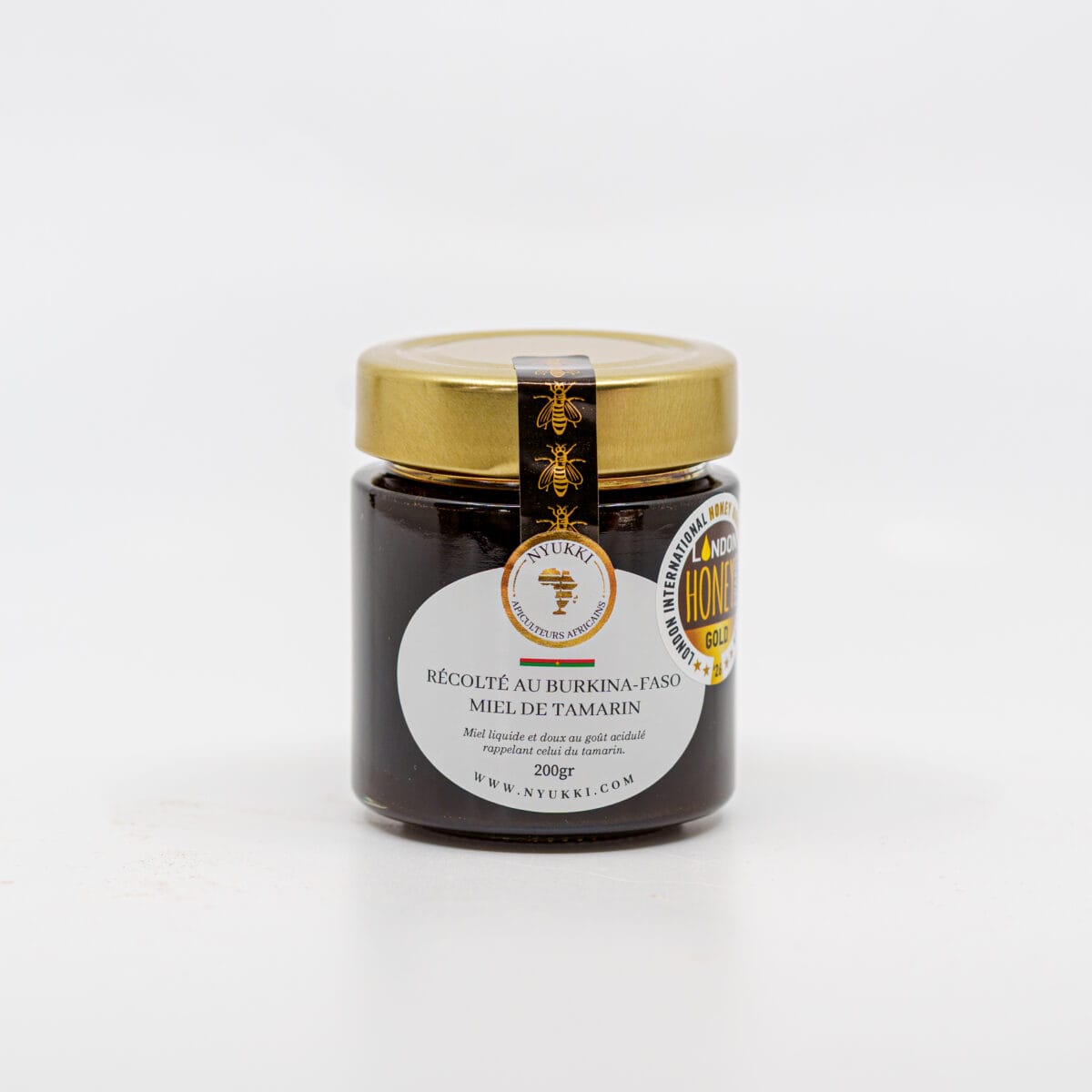
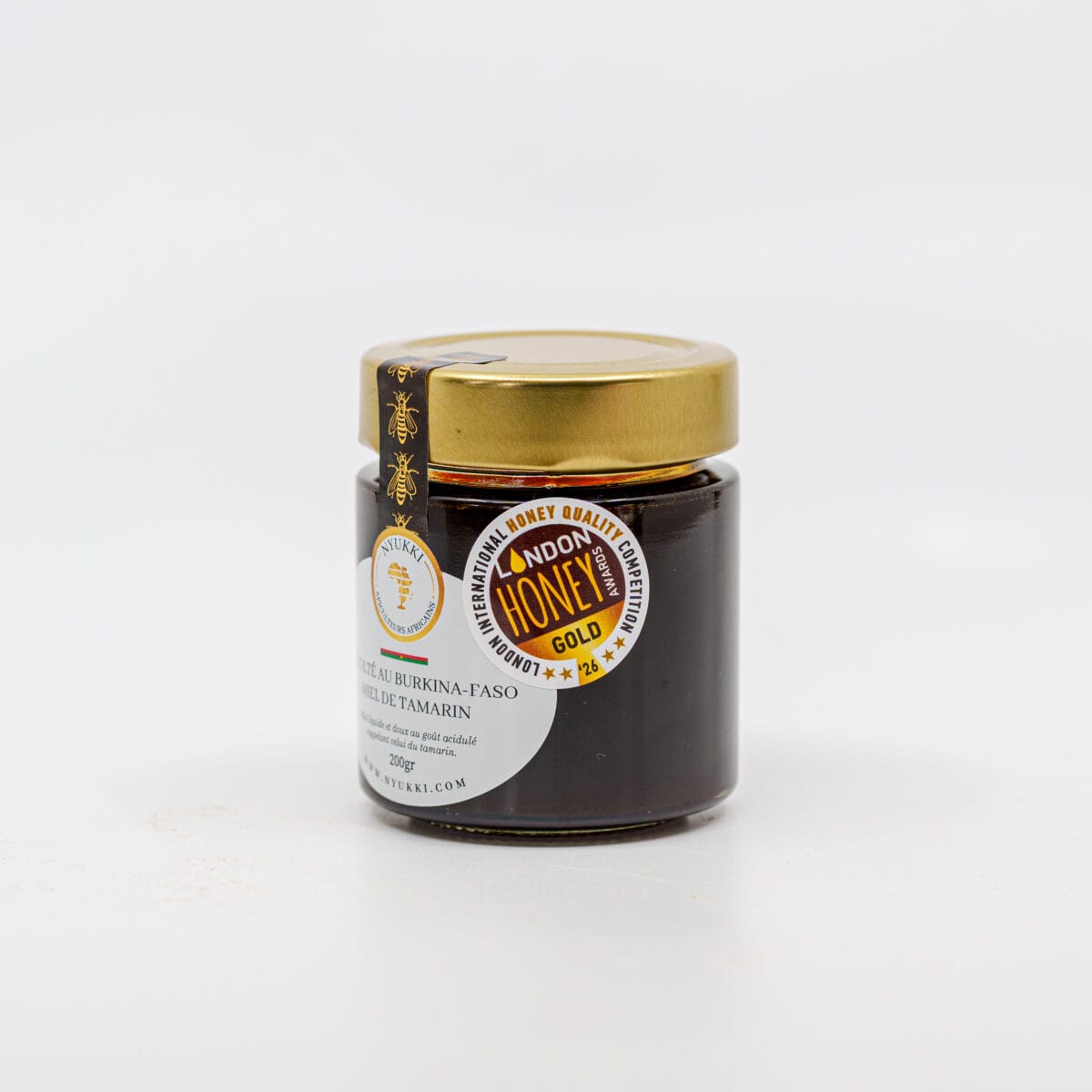
Tamarind honey comes from the Centre-Ouest region of Burkina Faso. From November to January, bees forage on the flowers of the tamarind tree, an iconic tree of the African savanna. The honey is harvested by local beekeepers, then jarred without being heated or pasteurised.
This is the honey that won the Gold medal at the London International Honey Awards 2026, awarded after a blind tasting by an international jury.
What you will taste
A brown amber colour and a very liquid texture. Intense tangy, lemony notes right from the nose. On the palate, it is refreshing and reminiscent of English fruit sweets. The most surprising of our honeys: try it if you think all honeys taste the same.
How to enjoy it
In a vinaigrette, a sweet-and-sour sauce or a ceviche. In African cuisine: peanut sauce, mafé or thieboudienne. In iced tea or a cold drink.
Technical Sheet and Traceability
- Origin: Centre-Ouest region (Burkina Faso)
- Harvest: November to January (tamarind tree blossoming)
- Size: 200 g recyclable glass jar
- Storage: Away from moisture and heat, keeps for 2 years
- Purity: 100% Tamarind Honey. No additives or preservatives.
Nutritional Values (per 100 g)
- Energy: 1360 kJ / 324 kcal
- Fat: 0.20 g (of which saturates: 0 g)
- Carbohydrates: 80 g (of which sugars: 77 g)
- Protein: 0.5 g
- Salt: Less than 0.01 g
Sensory Profile
- Colour: Brown amber, natural and unaltered
- Texture: Very liquid and fruity
- Nose: Tangy, lemony and intense
- Palate: Refreshing, tangy, reminiscent of English fruit sweets
Recommended pairings and uses
- Every day: In a vinaigrette, iced tea or a sweet-and-sour sauce.
- Gastronomy: Will enhance African cuisine (peanut sauce, thieboudienne, mafé) and your salads (tangy vinaigrette, ceviche).
- Drinks: Ideal in a twist on a mojito , an iced black tea or a tropical lemonade.
Also discover the rest of our selection of exceptional honeys and spices in our shop.
Reviews
There are no reviews yet.