Shea honey, tamarind honey, savanna honey… On labels, some honeys bear the name of a single flower, while others say “multi-flower” or “wildflower”. But what is the real difference? And which one should you choose? Here is what you need to know to read a label and find the honey that suits you.
What is a single-flower honey?
A single-flower (monofloral) honey is a honey made mainly from the nectar of a single flower species. For example, our shea honey comes mostly from the flowers of the shea tree, during its blossoming in the Atacora region of Benin.
Be careful: “mainly” does not mean “only”. Bees forage freely, so a jar always contains a little nectar from other flowers. However, a honey may bear the name of a flower when it comes mostly from that flower and shows its taste, colour and characteristics. This is also what European honey regulations provide for.
What is a multi-flower honey?
A multi-flower honey, also called polyfloral or wildflower honey, comes from the nectar of many different flowers, with none dominating. The bees forage on everything that blooms around the hive: trees, shrubs, wild plants.
It is not a lower-quality honey. On the contrary, a good multi-flower honey tells the story of a landscape’s diversity. Our savanna honey is a fine example: it comes from the successive blossoms of more than 200 species of the Atacora savanna in northern Benin. So its taste changes slightly from one harvest to the next, reflecting the season.
How is single-flower honey made?
Producing a single-flower honey takes know-how. The beekeeper places the hives as close as possible to an abundant bloom, such as a mango plantation or a mangrove forest. Then the honey is harvested just after this blossoming, before the bees move on to other flowers.
This requires a good knowledge of the seasons and plants of the region. That is why single-flower honeys are often produced in more limited quantities, and some are harvested only once a year.
How can you tell that a honey is really single-flower?
Confirmation comes from the laboratory.Pollen analysis identifies the pollens present in the honey and shows which flower dominates. It is complemented by tasting and by measurements such as colour or electrical conductivity.
For consumers, the best clue remains the producer’s transparency. A serious single-flower honey states its flower, but also its region and harvest period. On each of our product pages, you will find the precise origin and blossoming season. To learn more, read our article How to recognise real honey?
Differences in taste
This is where the difference shows the most. A single-flower honey has a distinctive personality, specific to its flower. At NYUKKI, for example:
- tamarind honey is tangy and reminiscent of English fruit sweets;
- coffee honey has roasted notes and a smoky finish;
- mangrove honey is reminiscent of the sea;
- shea honey is creamy, woody and lightly spiced.
A multi-flower honey, on the other hand, offers a rounder, more complex taste where several aromas blend. It is often easier to pair with anything, whereas a single-flower honey is chosen for a specific use.
Which one should you choose?
There is no right or wrong choice: it all depends on what you are looking for.
- To discover unique flavours, choose a single-flower honey. Start with a mild honey such as mango blossom or lychee, then try tamarind or coffee.
- For everyday use, at breakfast or in tea, a multi-flower honey such as savanna is ideal.
- For pairings with a cheese or a dish, a single-flower honey lets you aim precisely. For example, shea with Comté, mangrove with seafood.
Finally, nothing stops you from keeping both in your cupboard: a single-flower honey for tasting moments, a multi-flower honey for every day.
Frequently asked questions
Is single-flower honey better than multi-flower honey?
No, it is different. Single-flower honey has a more distinctive taste specific to its flower, while multi-flower honey offers a rounder, more varied taste. Quality depends above all on the producer and on how the honey is treated.
Does single-flower honey contain the nectar of only one flower?
Mainly, but not only. Bees forage freely, so a single-flower honey always contains a little nectar from other flowers. It is named after the dominant flower.
Why are single-flower honeys often more expensive?
Because they take more know-how: placing the hives in the right place at the right time, and harvesting just after the blossoming. Their quantities are also more limited.
What is the difference between polyfloral, multi-flower and wildflower honey?
None: these words all mean the same thing, a honey made from many flowers with none dominating. In French, it is sometimes also called “mille fleurs” (a thousand flowers).
Is NYUKKI savanna honey single-flower?
No, it is a multi-flower honey. It comes from the wild blossoms of more than 200 species of the Atacora savanna in Benin. All our other honeys are single-flower.
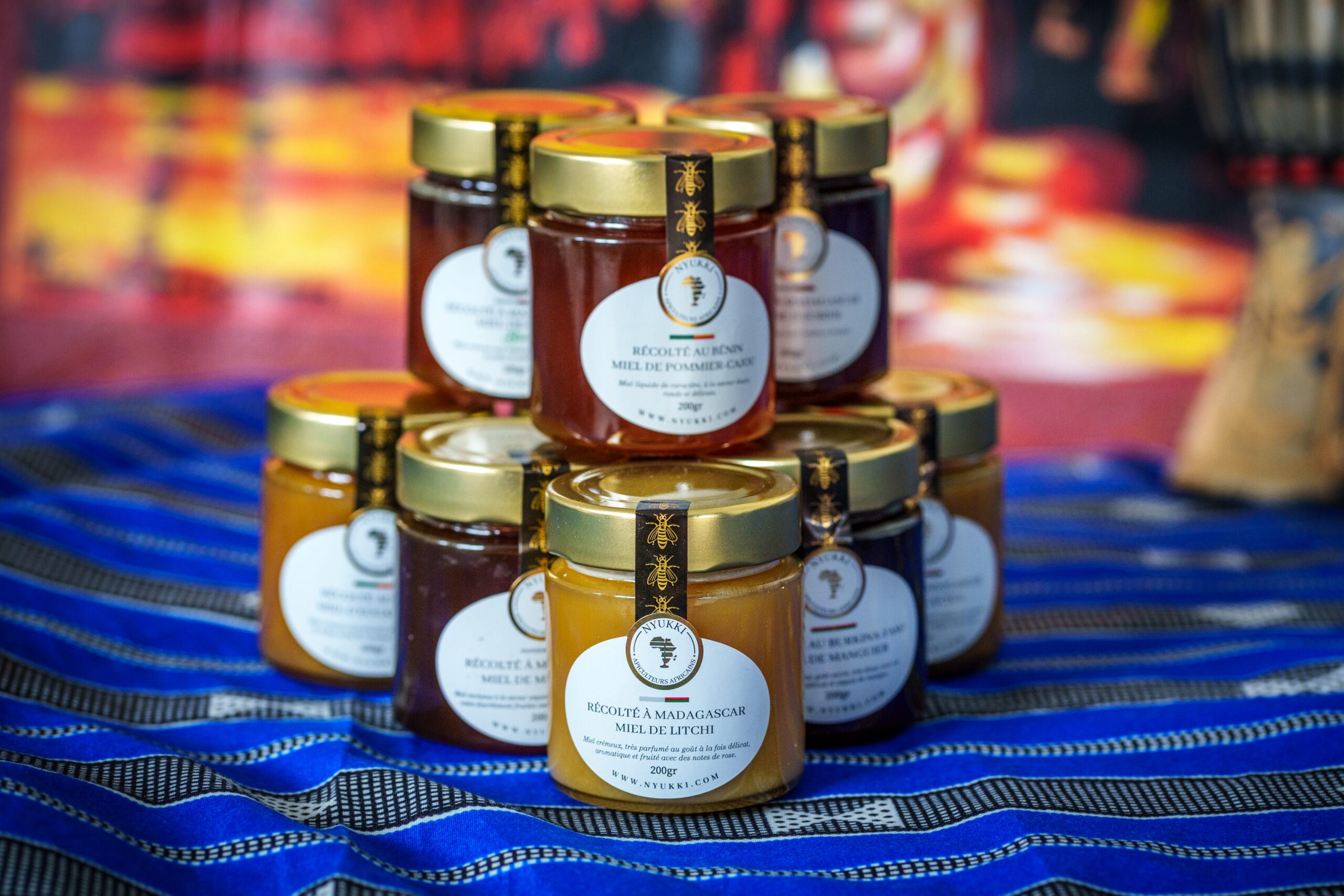
Want to compare? Discover our African honeys : eleven single-flower honeys and one multi-flower savanna honey, harvested in Benin, Burkina Faso and Madagascar.

