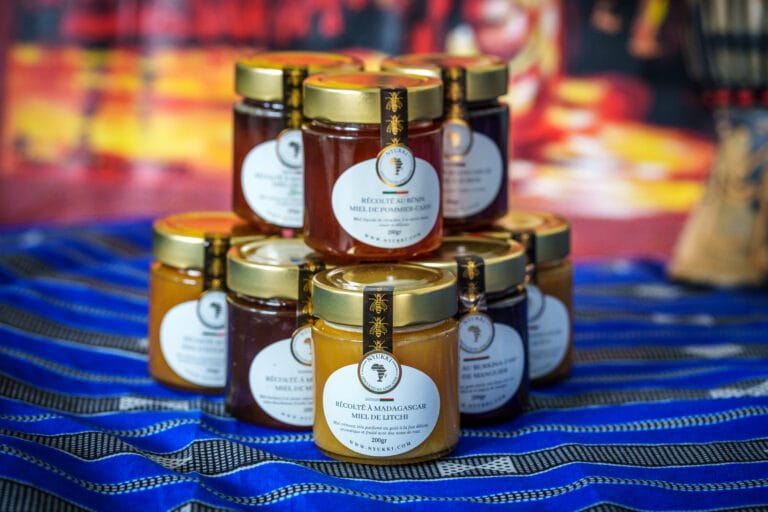
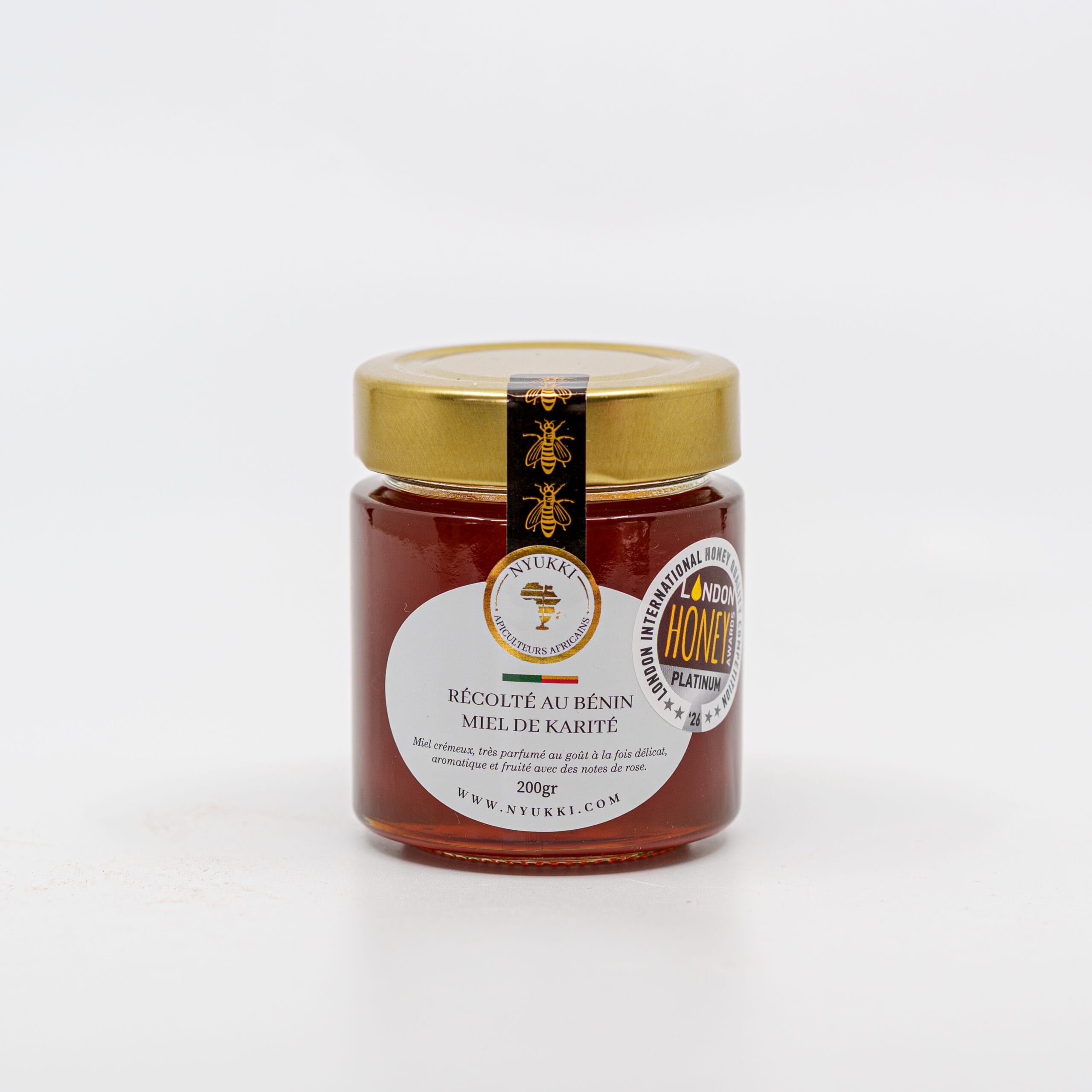
Everyone knows shea butter. Far fewer people know that the shea tree also gives a rare honey, creamy and woody, harvested in the savannas of West Africa. At NYUKKI, it is our most iconic honey, and it won the Platinum medal at the London International Honey Awards 2026. Here is where it comes from, what makes it so special and how to enjoy it.
Shea, an iconic tree of West Africa
The shea tree (Vitellaria paradoxa) grows wild in the savannas of West Africa. It is a tree that takes its time: it needs many years before bearing its first fruit, and it can then live for a very long time. Its nuts give the famous shea butter, traditionally prepared by village women.
In Benin, shea is part of the landscape and of daily life. It is not planted in rows: it grows freely in the savanna, among fields and tall grasses. That is why its honey reflects an environment that has remained largely natural.
Where does NYUKKI shea honey come from?
Our shea honey is harvested in theAtacoradepartment, in north-western Benin. In this region of hills and savannas, bees forage on shea flowers during its blossoming, from March to June.
The honey is then harvested by local beekeepers and jarred as it is: it is neither heated nor pasteurised, and nothing is added. So each jar keeps the character of its harvest.
Shea honey and shea butter: not to be confused
This is the question we are asked most often. Shea honey does not contain shea butter. Both come from the same tree, but not from the same part:
- the butter is extracted from the nuts of the fruit;
- the honey is made by bees from the nectar of the flowers.
Shea honey is therefore real honey, 100% honey, simply named after the flower it comes from.
Its taste: creamy, woody and lightly spiced
Shea honey is first recognised by its deep amber colour. Its texture is naturally creamy and dense : it coats the spoon without running. On the palate, it is sweet at first, then reveals woody, lightly spiced notes, with a very long finish.
So it is a honey of character, especially loved by those who prefer deep flavours to simple sweetness. Its creamy texture comes from a very fine natural crystallisation. To understand this, read our article Why does honey crystallise?
A Platinum medal-winning honey
In 2026, our shea honey won the Platinum medal at the London International Honey Awards, one of the highest distinctions of this international competition. The honeys are blind-tasted by a jury of professionals and scored on strict criteria such as aroma, texture and flavour.
It was also distinguished by the Global Honey Stars 2026, which list the honeys awarded in the major international competitions. You will find the details of these awards on our page Our certifications.
How to enjoy shea honey
Pure
Simple is often best: a spoonful on its own, to appreciate its texture and aromas. It is also delicious on a slice of country bread at breakfast.
With cheese
Its woody notes pair perfectly with mature cheeses. Try it, for example, with Comté, Fourme d’Ambert or a sheep’s cheese. It also goes very well with foie gras.
In cooking
As a finishing touch, it adds depth to a stew, a sauce or a marinade. For example, a few spoonfuls are enough to glaze roasted carrots or an oven-roasted chicken. Add it preferably at the end of cooking, because too much heat erases its aromas.
In a hot drink
Stirred into an infusion or tea, it brings a woody sweetness. Simply wait until the drink is warm rather than hot, below 40 °C, to keep all its flavours.
Storing it properly
Keep your shea honey at room temperature, away from light and moisture, with the lid tightly closed. There is no need to refrigerate it. Stored this way, it keeps its qualities for at least two years.
Frequently asked questions
Does shea honey contain shea butter?
No. Honey is made by bees from the nectar of shea flowers, while the butter is extracted from the nuts of the fruit. Both come from the same tree, but they are two different products.
What does shea honey taste like?
It is sweet, then woody and lightly spiced, with a long finish. Its texture is creamy and dense, and its colour deep amber.
Where is NYUKKI shea honey harvested?
In the Atacora department, in north-western Benin, during the shea blossoming, from March to June.
Why is shea honey creamy?
Because it naturally crystallises into very fine crystals, which gives it a smooth texture. This is perfectly normal for a honey that has not been heated.
What should I eat shea honey with?
Pure by the spoonful, on country bread, with mature cheeses such as Comté, with foie gras, or as a finishing touch in a stew.
Want to taste it? Discover our shea honey from Benin, awarded a Platinum medal, and our whole collection of African honeys.