Honey is one of the most frequently adulterated foods in the world. In 2023, a European Commission investigation found nearly half of the imported honeys analysed to be suspicious, suspected of having been cut with sugar syrups. Enough to make you wary when choosing a jar. So how can you tell whether honey is really honey? Here is what works, what does not, and the good habits to adopt.
What is “fake honey”?
Fake honey is rarely an entirely artificial product. Most often, it is real honey diluted with cheap sugar syrups (rice, corn, beet), which are harder to detect than you might think. It is also fraud when the origin is false: a honey presented as local or from a specific flower, when it is actually a blend with no clear origin.
Under European regulations, honey is a natural product: nothing may be added to it, no sugar, no water, no preservatives. Any addition turns it into a product that can no longer be called “honey”.
Home tests: why you should not rely on them
Online, you will find many tips for “testing” your honey at home. They are tempting, but none of them is reliable :
- The glass of water : honey that sinks to the bottom without dissolving would be pure. In reality, this depends mainly on its water content and temperature, and honey cut with thick syrup behaves exactly the same.
- The thumb test : a drop that “holds” on your finger would be real honey. Thick syrup holds too.
- The flame or match test : real honey would burn. The result actually depends on moisture, not purity.
- Paper towel : same problem, it only measures the amount of water.
In short, these tests cannot tell pure honey from skilfully adulterated honey. Fraudsters know this well: the syrups they use are chosen to look like honey.
What really works: laboratory analysis
So only a laboratory can confirm that a honey is authentic. Several analyses are used, often in combination:
- The sugar profile and the search for sugars foreign to honey;
- isotope analysis, which detects sugars from plants such as corn or cane;
- pollen analysis, which identifies the pollens present and confirms the floral and geographical origin;
- quality measurements such as moisture content or HMF, an indicator that rises when honey has been overheated or poorly stored.
Consumers cannot carry out these analyses themselves. However, they can choose producers and brands that do, and that are transparent about them.
6 good habits for choosing real honey
1. Read the label to the end
Be wary of vague wording such as “blend of EU and non-EU honeys”. European regulations now require the countries of origin of blended honeys to be stated. A good honey clearly shows its country, and even its harvest region.
2. Prefer a precise origin
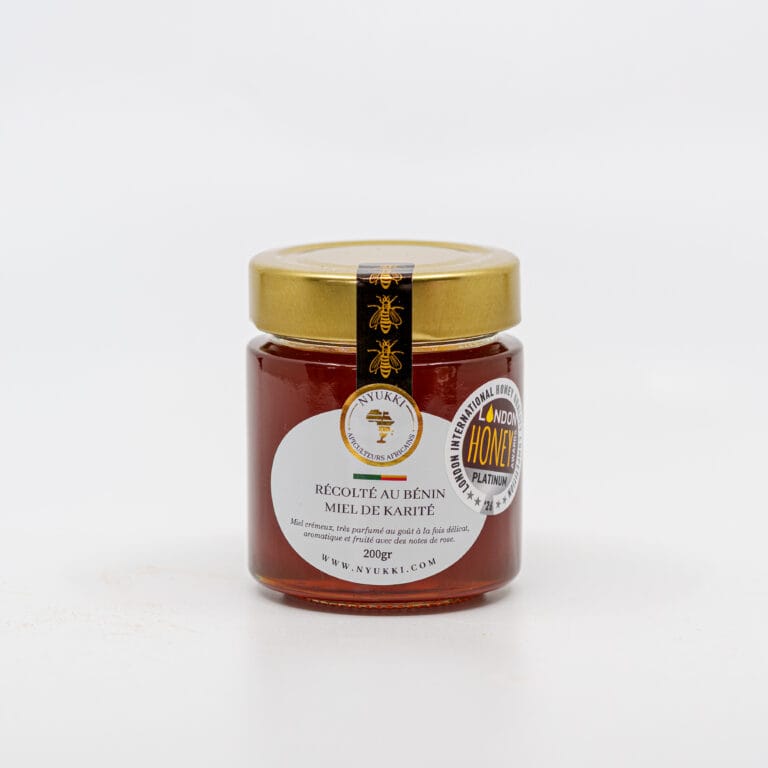
Indeed, the more precise the origin, the easier it is to check. A honey that states its country, region and flower commits to information that can be verified. On each of our product pages, for example, you will find the harvest region and the blossoming period: our shea honey comes from the Atacora region in north-western Benin, and is harvested from March to June.
3. Be wary of prices that are too low
Producing honey is expensive, because it takes hives, time, work and good blossoming. A jar of “pure” honey sold at a very low price should make you curious. Price alone proves nothing, but an abnormally low price is a warning sign.
4. Do not be afraid of crystallisation
Honey that hardens in its jar is perfectly normal: it is even how honey behaves when it has not been heated. We explain this in detail in our article Why does honey crystallise? On the other hand, a honey that stays perfectly liquid for years, whatever the flower, may have been heated or processed.
5. Favour honeys awarded by serious competitions
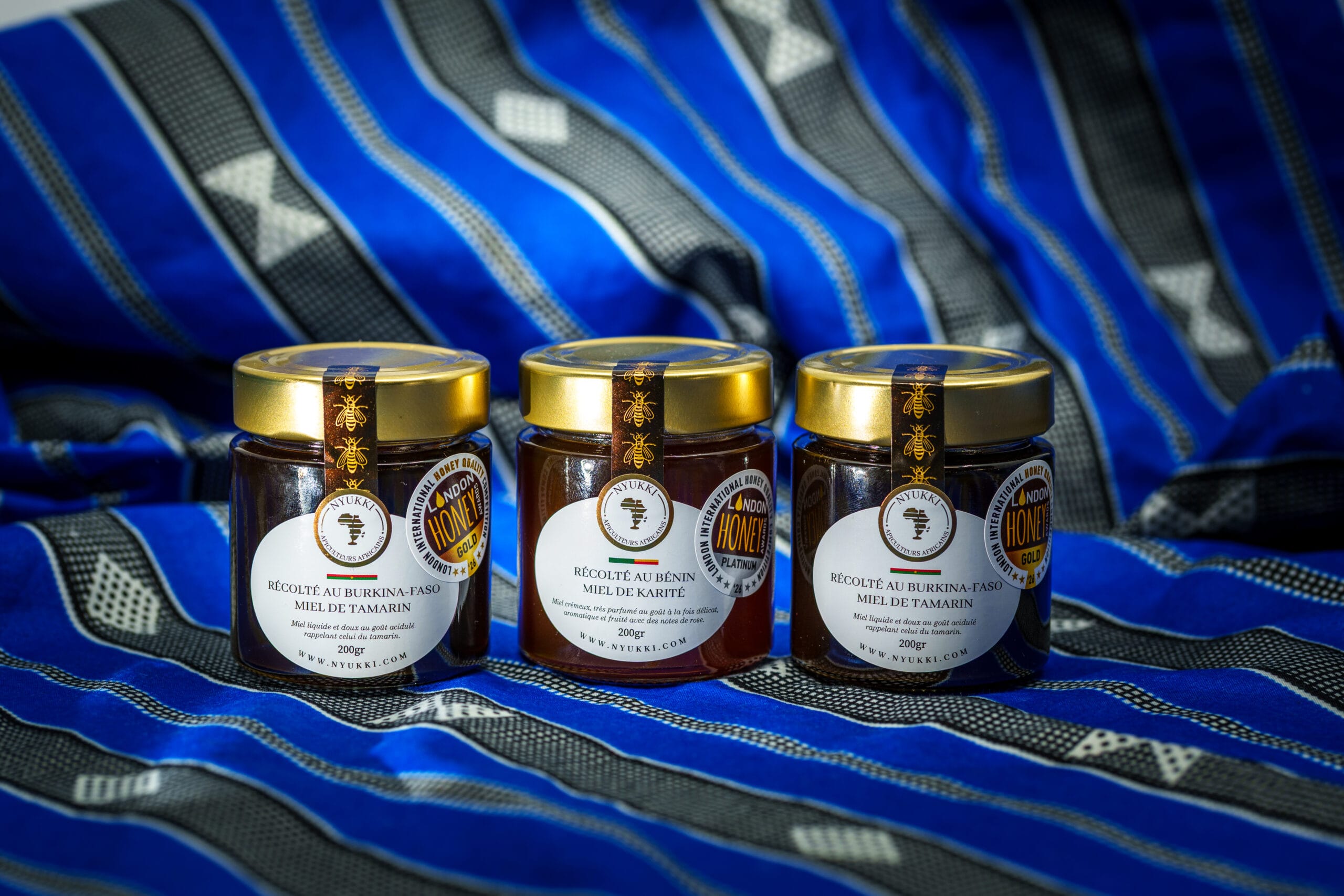
Serious international competitions have honeys blind-tasted by professional juries, backed by laboratory analyses. A medal is not an absolute guarantee, but it shows that a honey has been examined by specialists. Our shea honey won the Platinum medal and our tamarind honey won the Gold medal at the London International Honey Awards 2026 (see our certifications).
6. Choose transparent producers
Finally, a serious producer can tell you where their honey comes from, how it is harvested and whether or not it is heated. So do not hesitate to ask. At NYUKKI, we work directly with beekeepers and cooperatives in Benin, Burkina Faso and Madagascar, and our honeys are neither heated nor pasteurised, with nothing added.
Taste, a valuable clue
An authentic single-flower honey has real personality: tamarind is tangy, coffee honey has a smoky finish, and mangrove honey is reminiscent of the sea. By contrast, a honey that tastes only sweet, with no particular aroma, may be a highly processed honey or a blend. Taste does not replace an analysis, but it says a lot about the care taken with the product.
Frequently asked questions
Does the glass of water test show whether honey is pure?
No. It depends mainly on the honey’s water content and temperature. Honey cut with a thick syrup reacts the same way as pure honey.
Is honey that crystallises always pure?
No, but it is the normal behaviour of honey that has not been heated. Some pure honeys also naturally stay liquid for a long time, such as acacia or tamarind.
How can I know where a honey comes from?
Read the label: the country of origin must be shown. Serious brands also state the harvest region and the flower. Only a laboratory pollen analysis can confirm it.
Can honey contain added sugar?
No. Under European regulations, nothing may be added to honey. A product with added sugar or syrup cannot be called honey.
Is expensive honey always real honey?
Not necessarily. Price is a clue, not proof. It should be backed up by a precise origin, a transparent producer and, ideally, recognised analyses or awards.
Want to taste honeys with a clear origin? Discover our single-flower honeys from Africa, harvested in Benin, Burkina Faso and Madagascar, each with its own region and harvest period.