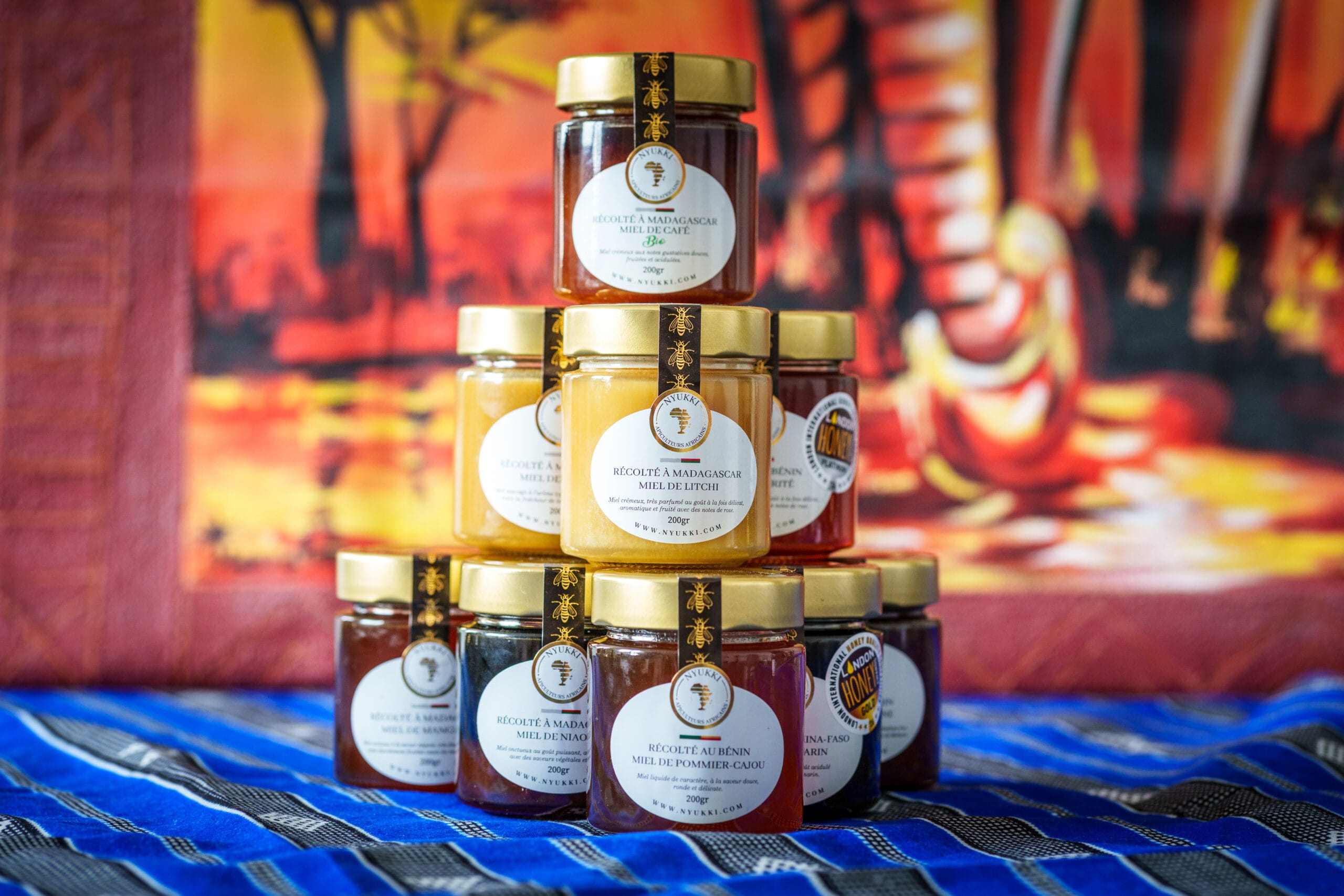
Mild or bold, runny or creamy, for tea or for cheese… Faced with a range of honeys, it is not always easy to choose. Yet every honey has its own personality and favourite uses. Here is a short guide to finding the one that suits you, among our twelve honeys from Benin, Burkina Faso and Madagascar.
Choosing by taste
You like mild honeys
Start with smooth, rounded honeys. For example, our mango blossom honey is mild and tropical, with a delicately fruity finish. The lychee honey is floral and fresh. Finally, the cashew apple honey offers round notes of cashew apple. These are excellent ways to discover African honeys.
You like bold flavours
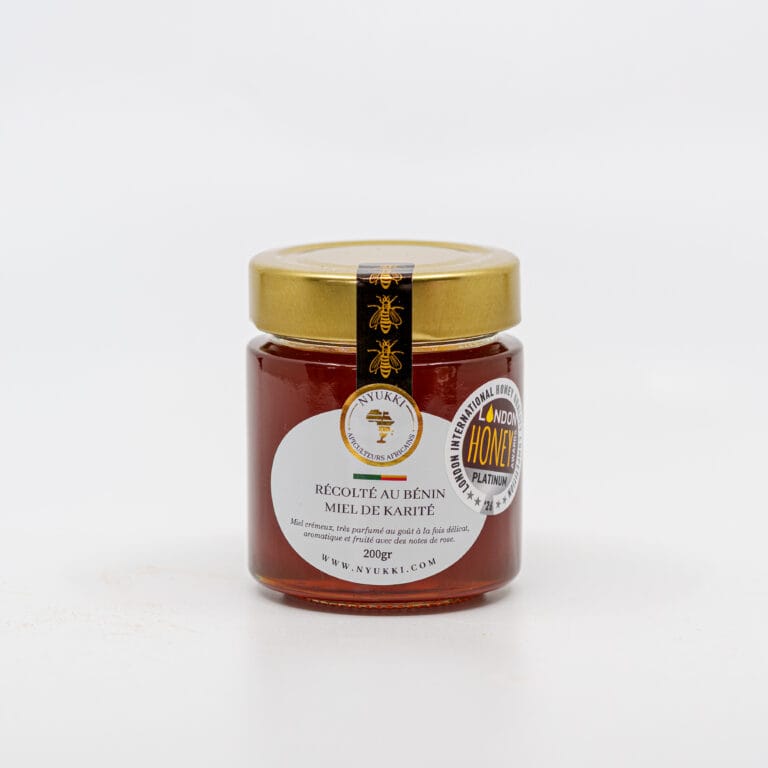
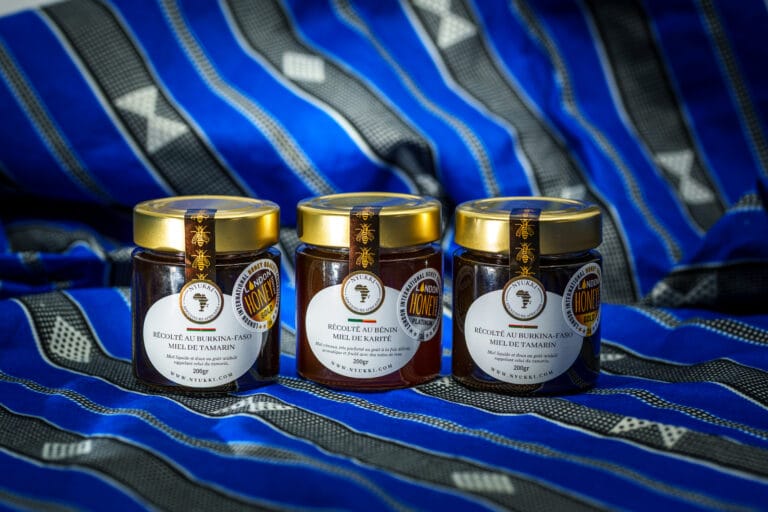
In that case, turn to more intense honeys. The shea honey is woody and lightly spiced. It also won the Platinum medal at the London International Honey Awards 2026. The coffee honey has roasted notes and a smoky finish. Finally, the niaouli honey is powerful, with a long finish of salted butter caramel.
You like to be surprised
Some honeys are unlike any other. The tamarind honey, awarded a Gold medal, is tangy and reminiscent of English fruit sweets. The mangrove honeyhas a surprising marine note. These are our favourite honeys for showing that honey can have far more taste than sugar.
You are looking for a rare honey
The jujube honey, harvested in the Highlands of Madagascar, is one of the rarest in our collection. It is smooth, woody and fruity, with a caramelised touch.
Choosing by texture
Texture matters as much as taste. If you prefer a honey that spreads without running, choose a creamy honey such as shea oreucalyptus. On the other hand, to sweeten a drink or drizzle over a dessert, a runny honey such as tamarind, lychee or mango blossom will be more practical.
Just bear in mind that texture changes over time: a runny honey may crystallise, which is perfectly normal. We explain this in our article Why does honey crystallise?
Choosing by use
For tea and infusions
Eucalyptus honey, with its caramel notes, is ideal in an Earl Grey or an infusion. Lychee honey pairs very well with green or white tea, and niaouli adds indulgence to spiced warm milk. In every case, add the honey once the drink has cooled a little, because too much heat erases its aromas.
For breakfast
The savanna honey, a multi-flower honey, is perfect for every day because it goes with everything, on toast as well as in yoghurt. Mango blossom and cactus honey are also delicious in porridge or a smoothie.
For cheese
This is where bold honeys shine. For example, pair shea with Comté or Fourme d’Ambert, niaouli with Mimolette or blue cheese, and coffee with Livarot. Mangrove, for its part, is a surprising match for sheep’s cheese.
For baking
Eucalyptus is the pastry chefs’ favourite, especially in madeleines or a crème brûlée. Cashew apple honey adds a fruity touch to cakes, and coffee honey fits perfectly in a tiramisu.
For savoury cooking
Tamarind brightens a vinaigrette, a sweet-and-sour sauce or a ceviche. Savanna honey is used in marinades for grilled meats, and mangrove has its place in Asian cuisine, with teriyaki sauce or pad thai.
Choosing a honey as a gift
For a gift, focus on story and rarity. Shea honey and tamarind honey, both awarded at the London International Honey Awards 2026, are safe choices. For a curious foodie, jujube or mangrove will also make a strong impression. Finally, offering two or three honeys with different profiles lets you compare and discover them together.
Frequently asked questions
Which is the mildest honey?
Among our honeys, mango blossom, lychee and cashew apple are the mildest. They are perfect for discovering African honeys or for palates that prefer light flavours.
Which honey should I choose for tea?
Eucalyptus, with its caramel notes, is ideal in black tea or an infusion. Lychee pairs well with green or white tea. Add it once the drink has cooled a little.
Which honey should I serve with cheese?
Bold honeys work best: shea with Comté, niaouli with blue cheese, coffee with Livarot, or mangrove with sheep’s cheese.
Which honey should I give as a gift?
Shea honey, awarded a Platinum medal, and tamarind honey, awarded a Gold medal, are safe gifts. For a curious foodie, a rare honey such as jujube will make a strong impression.
Which honey can I use instead of sugar?
A mild, runny honey such as mango blossom, lychee or cactus easily sweetens a yoghurt, a smoothie or a drink, while bringing its own aromas.
Still unsure? Browse all our African honeys : each product page details the origin, taste and best pairings.